What every family needs to know about measles

In a small town, word travels fast. Measles travels faster.
Living in a rural community has its perks. There are familiar faces, friendly neighbors and a sense of connection that can be hard to find elsewhere. When it comes to contagious illness, though, those same connections can make it easier for germs to spread. Measles is one of the most contagious viruses known, and although many of us have never encountered it, it is making headlines again. Here is what you need to know to keep your family healthy.
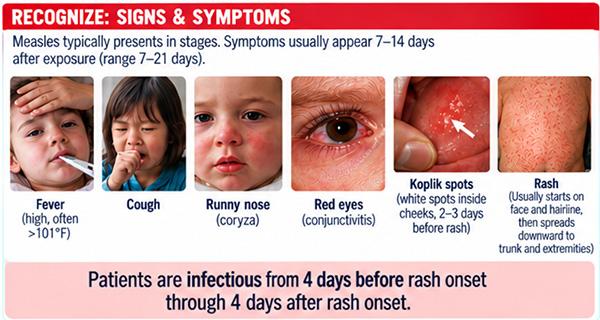
Measles is a viral infection that spreads through the air when someone coughs or sneezes and can linger in a room for up to two hours. About 90% of people who come into contact with the virus will become infected if they have not been vaccinated. Common symptoms include fever, cough, rash, runny nose, red eyes and sores on the inside of the mouth. It can also lead to serious complications like pneumonia, brain swelling and in some cases, death.
Rising measles cases
In 2000, measles was declared eliminated in the United States, but it has been making a comeback. So far this year, there have been more than 4,000 cases in the U.S., up from around 2,300 in 2025. Nearly 60% of this year’s cases involved people 19 and younger. Of those, 95% were unvaccinated, 2% had received one MMR dose and 2% had received two MMR doses. Ten percent of cases required hospitalization, and two deaths have been reported.
Missouri has seen 11 confirmed cases in 2026, following six cases in 2025.
Why is this happening?
The MMR vaccine was first introduced in 1963, and a second dose was recommended in 1989. For decades, vaccination rates were high enough to protect communities. Recently, however, those rates have been falling. In Missouri, the MMR vaccination rate has dropped to 89.5%. Protecting a community from a virus as contagious as measles requires about 95% of people to be fully vaccinated. While Missouri public schools require two MMR doses for students in kindergarten through 12th grade, exemptions are becoming more common.
How to protect your family
Vaccination is the most effective way to prevent measles. The vaccine is typically given at 12 months of age and again between ages 4 and 6, before entering kindergarten. One dose is 93% effective; two doses are 97% effective. If you are traveling to an area with high measles activity or there is an outbreak nearby, vaccination can be given ahead of the standard schedule.
If you are unsure about your vaccination status or your child’s, talk to your primary care physician or provider. We want to keep you and our whole community protected.
Dr. Abrea Cridlebaugh is a family medicine physician at Bothwell Family Medicine Associates, located on the first floor of the Healing Arts Center at 3700 W. 10th St. in Sedalia. To schedule an appointment, call the clinic at 660.827.2883 or Centralized Scheduling at 6608298888.